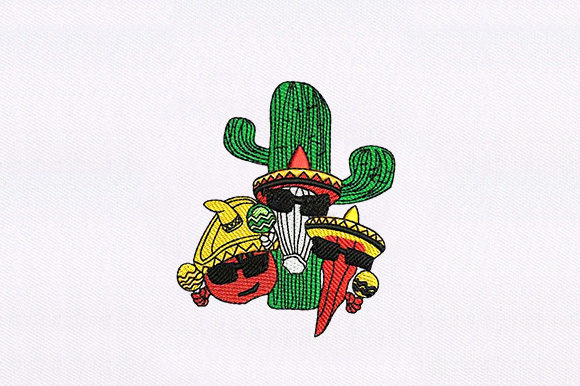
Saguaro Plant Embroidery Review for Small Business Merch
As an embroidery designer who has spent years digitizing and reviewing files for commercial use, I approach every new machine embroidery design with a critical eye. It is not just about whether the artwork looks cute on a screen; it is about how that design translates into a tangible, durable asset for a brand. Today, I am reviewing the Saguaro Plant design, a piece categorized under Single Flowers within the broader world of Embroidery. This review is tailored for small business owners, Etsy sellers, apparel decorators, and crafters who need to know if this file will hold up in a professional production environment.
First Impressions: Visual Personality and Brand Fit
The initial appeal of the Saguaro Plant lies in its playful yet recognizable silhouette. The product description hints at a "Mexican style" party vibe, suggesting a design that is fun, vibrant, and culturally resonant. For a boutique or a creative studio, this visual personality is a strong starting point. It does not scream corporate rigidity; instead, it offers a friendly, approachable aesthetic. This makes it an excellent candidate for brands that want to project warmth and community engagement.
However, from a design perspective, "cute" can sometimes mean overly simplified or lacking in structural integrity when stitched out. My first task was to evaluate if the charm of the cactus translates into clean lines or if it risks looking messy due to poor digitizing. The potential for this design to serve as a standout element in a brand identity is high, provided the execution matches the concept.
Real-World Applications for Small Business Merch
Where does the Saguaro Plant truly shine? In my experience, this type of botanical motif is incredibly versatile for small business merch. Here is how I envision it performing across various products:
- Embroidered Patches: This is perhaps the strongest use case. A cactus shape is distinct and easily recognizable even at smaller scales. Creating an embroidered patch allows businesses to add value to plain items later, offering a low-risk way to test the design with customers.
- Apron Embroidery: For bakeries, florists, or coffee shops, staff uniforms are walking billboards. Placing the Saguaro Plant on the chest pocket or upper back of an apron adds a touch of local flair without overwhelming the garment.
- Tote Bag Design: Canvas tote bags are a staple for eco-conscious brands. The bold lines of a saguaro work well against the textured weave of canvas, creating a rustic, handmade feel that customers love.
- Cap Embroidery: A small version on the side panel or front of a baseball cap can serve as a subtle brand marker. However, this requires careful attention to curve distortion, which I will address later.
- Custom Apparel: Whether it is a staff t-shirt or a limited-edition hoodie, this design can act as a central graphic or a sleeve accent, enhancing the perceived value of the finished product.
Technical Considerations and Production Challenges
While the aesthetic is promising, technical execution is where many designs fail. When reviewing the Saguaro Plant, several factors must be considered before running a full production batch.
Stitch Density and Fabric Texture
Cactus designs often rely on solid fills to represent the plant body. If the stitch density is too high, the fabric may pucker, especially on lightweight materials like cotton tees. Conversely, if the density is too low, the backing material might show through, ruining the professional look. I recommend testing the design on the exact fabric texture you intend to use. For heavier materials like denim or canvas tote bags, higher density is acceptable, but for soft jerseys, a lighter fill or satin stitch border might be necessary.
Size Constraints and Detail Loss
The description mentions it is a "cute" embroidery, which often implies smaller dimensions. When scaling down for cap embroidery or small labels, fine details can merge. If the design includes intricate spines or facial features (if anthropomorphized), these may become indistinguishable blobs at under two inches. Always create a printable mockup at actual size to check for clarity. If the design loses its character when shrunk, it may not be suitable for small patches or sleeve details.
Color Contrast and Thread Choices
Green is the obvious choice, but for commercial embroidery, consider how the thread colors interact with the garment. A dark green cactus on a black uniform will vanish. For dark uniforms, consider adding a white or light-colored outline to ensure visibility. This simple adjustment can significantly boost customer trust and recognition, as the logo remains legible from a distance.
Enhancing Brand Identity and Customer Engagement
Using a distinctive design like the Saguaro Plant contributes to a cohesive brand identity. Consistency in visual assets helps customers recognize your business instantly. When used on custom apparel or packaging accents, it signals attention to detail. A well-executed embroidery suggests quality, which justifies higher price points for handmade products.
Furthermore, themed merchandise drives engagement. A "Mexican style" or desert-themed collection can create a narrative around your brand, making the handmade product feel part of a larger story. This emotional connection encourages buyers to share photos on social media, providing free marketing for your shop.
Practical Designer Notes for Implementation
Before you purchase this digital embroidery file and start stitching, follow these steps to ensure success:
- Test in Black and White: Remove color variables to check the structural integrity of the design. If it looks good in monochrome, it will likely look good in color.
- Check Hoop Size Compatibility: The product description is cut off ("comes wit"), so it does not specify the included hoop size or formats. Verify that the file fits your machine’s maximum hoop area. Do not assume it fits all standard sizes.
- Use Proper Stabilizer: For stretchy fabrics, use a cut-away stabilizer to prevent distortion. For woven fabrics like tote bags, a tear-away may suffice, but test first.
- Review Commercial Licensing: Ensure the license allows for commercial embroidery and mass production if you plan to sell hundreds of units. Some designers restrict the number of physical items sold.
- Compare Design Assets: Place the Saguaro Plant beside your existing logos and graphics. Does it complement your current style, or does it clash? Visual consistency is key to professionalism.
In conclusion, the Saguaro Plant offers a charming and versatile option for small business merchandise. Its potential in patches, aprons, and tote bags is significant, provided you manage technical aspects like stitch density and sizing carefully. By treating this embroidery file as a strategic brand asset rather than just a decorative element, you can enhance your product value and strengthen customer loyalty. Always prioritize testing on real fabric before committing to large orders, ensuring that your final output meets the high standards your customers expect.