Clovers Two Pack: A Designer’s Review for Real Projects
As a designer who has spent countless hours digitizing and stitching out thousands of patterns, I have learned that not all machine embroidery design files are created equal. Some look stunning on a screen but turn into a tangled mess of thread breaks and puckering on fabric. Others are robust, forgiving, and elevate the final product with minimal effort. Recently, I had the chance to evaluate the Clovers Two Pack, a set of designs categorized under Intricate Cuts within the broader world of Embroidery. My goal was not just to admire the aesthetics, but to determine if these files hold up under the rigorous demands of client work, small business production, and personal gifting.
First Impressions and Visual Mood
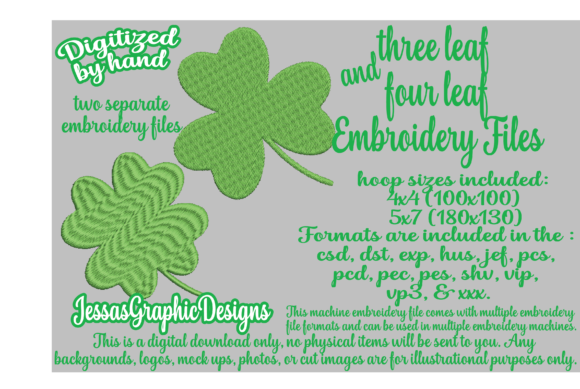
The first thing that strikes you about the Clovers Two Pack is its balance between elegance and simplicity. The shapes are clean, avoiding unnecessary clutter while maintaining enough detail to feel sophisticated. This is crucial because overly complex designs often fail on textured fabrics or smaller hoop sizes. The mood these clovers evoke is one of timeless charm—perfect for spring collections, St. Patrick’s Day promotions, or simply adding a touch of nature-inspired whimsy to everyday items.
From a layout perspective, the two-pack format offers versatility. You are not stuck with a single motif; instead, you have options that can be used individually for subtle accents or paired for a bolder statement. This flexibility is a significant asset for Etsy sellers and craft business owners who need to maximize the utility of their design assets. Whether you are creating a minimalist tote bag design or a more elaborate sweatshirt embroidery piece, these clovers adapt well without losing their visual identity.
Real-World Application: The Custom Tote Test
To truly understand the value of an embroidery file, you must put it to work. I decided to test the Clovers Two Pack on a heavy-duty canvas tote bag, a popular item in my small shop product lineup. Canvas is notoriously difficult due to its loose weave and tendency to shift during stitching. However, because these designs are described as easy to stitch, I approached the project with confidence.
I used a medium-weight cut-away stabilizer to support the fabric and selected a high-sheen polyester thread in a deep emerald green to contrast against the natural beige canvas. The result was immediate and satisfying. The satin stitch edges were crisp, and the fill stitch areas lay flat without excessive bulk. For a handmade product intended for daily use, this durability is non-negotiable. Customers want items that look professional after multiple washes, and the structural integrity of this design suggests it will hold up well over time.
Versatility Across Product Lines
Beyond totes, the Clovers Two Pack shines in various other applications. For custom apparel, such as linen dresses or cotton shirts, the design adds a boutique feel without overwhelming the garment. I also tested a scaled-down version on a baby bib. Here, the smoothness of the stitches is critical, as rough edges can irritate sensitive skin. The baby embroidery turned out soft and secure, making it an excellent choice for personalized gift items.
For those interested in embroidered patch creation, these clovers provide a clear, recognizable shape that reads well even from a distance. This makes them ideal for commercial embroidery projects where brand recognition or quick visual impact is necessary. Additionally, they work beautifully on curved surfaces like caps, provided you adjust your hoop size and stabilization technique to account for the curvature.
Navigating Technical Challenges
While the Clovers Two Pack is versatile, no design is universal. There are specific scenarios where caution is required. If you are working with very thin or stretchy fabrics, such as silk or lightweight jersey, you must pay close attention to stitch density. Although these designs are optimized for ease, dense areas can still cause puckering if the fabric is not properly supported. Always test on scrap fabric first to gauge how the material reacts.
Another consideration is color contrast. On dark fabrics, ensure your thread colors pop sufficiently. I recommend running a black-and-white mockup before stitching to verify that the details remain visible. If the design relies heavily on subtle shading, it might get lost on dark backgrounds. In such cases, consider using a lighter underlay or choosing a brighter thread palette.
For items that require frequent washing, such as kitchen towels or aprons, inspect the running stitch outlines closely. Ensure they are tight enough to prevent unraveling but not so tight that they perforate the fabric. The Clovers Two Pack appears to handle this balance well, but individual machine tension settings can vary, so a test stitch is always wise.
Enhancing Brand Value and Customer Trust
From a business perspective, the quality of your digital embroidery file directly impacts your brand perception. Using high-quality designs like the Clovers Two Pack signals professionalism to your customers. It shows that you care about the finish and longevity of your finished product. This attention to detail builds trust and encourages repeat business.
Moreover, these designs are excellent for creating cohesive printable mockup portfolios. Their elegant aesthetic fits well with modern, minimalist branding, allowing you to showcase your skills in a way that appeals to high-end clients. Whether you are selling holiday embroidery items or year-round basics, having reliable, attractive designs in your library streamlines your production process and reduces the risk of costly errors.
Practical Notes for Designers
- Check Licensing: Before selling items made with the Clovers Two Pack, confirm the license terms. Ensure you have the right to use the design for commercial purposes if you are an Etsy seller or run a craft business.
- Stabilizer Selection: Match your stabilizer to your fabric. Use cut-away for stretchy materials and tear-away for stable wovens to maintain the design’s shape.
- Thread Quality: Invest in high-quality threads to reduce breaks and enhance the sheen of the satin stitch and fill stitch areas.
- Hoop Size: Verify that your chosen hoop size accommodates the design dimensions, especially if you plan to add text or other elements around the clovers.
- Fabric Texture: Be mindful of highly textured fabrics like terry cloth or fleece. These may obscure fine details, so consider simplifying the design or increasing stitch size if necessary.
In conclusion, the Clovers Two Pack is a solid addition to any designer’s library. It offers the right mix of aesthetic appeal and technical reliability, making it suitable for a wide range of embroidery project types. By understanding its strengths and limitations, you can leverage these designs to create beautiful, durable, and commercially viable products that resonate with your audience.